How Much Does a Business Website Cost in 2026?
If you’re planning to build a website for your business, one of the first questions you’re likely to ask is:
“How much does a business website cost?”
The honest answer is: it depends on what the website needs to accomplish.
A basic five-page website can cost significantly less than a custom e-commerce store, booking platform, membership website, or lead-generation website with advanced integrations.
In 2026, businesses should think about a website as more than an online brochure. A professionally built website can become a 24/7 sales, marketing, and lead-generation asset for your business.
The important question isn’t simply:
“How much does a website cost?”
It is:
“What does my business need the website to achieve?”
This guide explains the major factors that determine business website cost, what features you should budget for, and how to avoid paying for a website that doesn’t actually help your business grow.
What Determines the Cost of a Business Website?
Website pricing isn’t just about the number of pages.
Several factors influence the actual cost of development.
1. Website Design
The first major factor is the design itself.
A template-based website can be relatively straightforward to assemble. A custom website requires considerably more planning and design work.
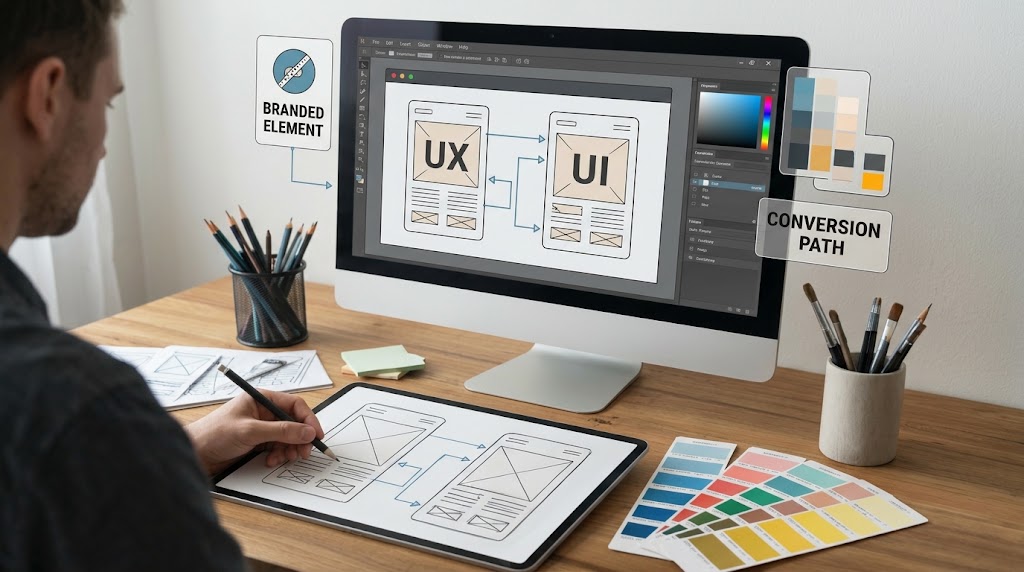
A professional design should consider:
- Brand identity
- Typography
- Color system
- User experience
- Navigation
- Mobile responsiveness
- Conversion paths
- Calls to action
- Visual hierarchy
Your website should not simply look attractive.
It should make it easy for visitors to understand:
Who you are → What you offer → Why they should trust you → What they should do next.
This is why custom website design can be more valuable than simply installing a template and replacing the text.
Explore HaxoTech’s Website Design Services → https://haxotech.com/solutions/website-design/
2. Number of Pages
A five-page website and a 50-page website are completely different projects.
A typical small business website might include:
- Home
- About
- Services
- Case Studies or Portfolio
- Contact
However, businesses targeting search traffic may need dedicated pages for individual services, locations, industries, and customer problems.
For example, an agency could create separate pages for:
- Website Design
- WordPress Development
- Shopify Development
- E-commerce Development
- SEO
- Local SEO
- Social Media Marketing
This creates a stronger information architecture and gives search engines more context about the business.
Google’s SEO documentation recommends making websites easy for search engines to crawl, understand, and index.
3. Content Creation
Website development and content creation are two different jobs.
Your website may need:
- Homepage copy
- Service descriptions
- About page
- FAQs
- Blog articles
- Case studies
- Product descriptions
- Landing pages
- Calls to action
Poor content can make an expensive website perform like a cheap one.
Your content should clearly explain the customer’s problem, your solution, your credibility, and the action you want visitors to take.
For SEO-focused websites, content should also be structured around genuine search intent instead of simply repeating keywords.
Google specifically recommends creating helpful, reliable, people-first content rather than producing content primarily to manipulate rankings.
4. SEO
A website can look excellent and still generate very little organic traffic.
That’s because website design and SEO are related, but they aren’t the same thing.
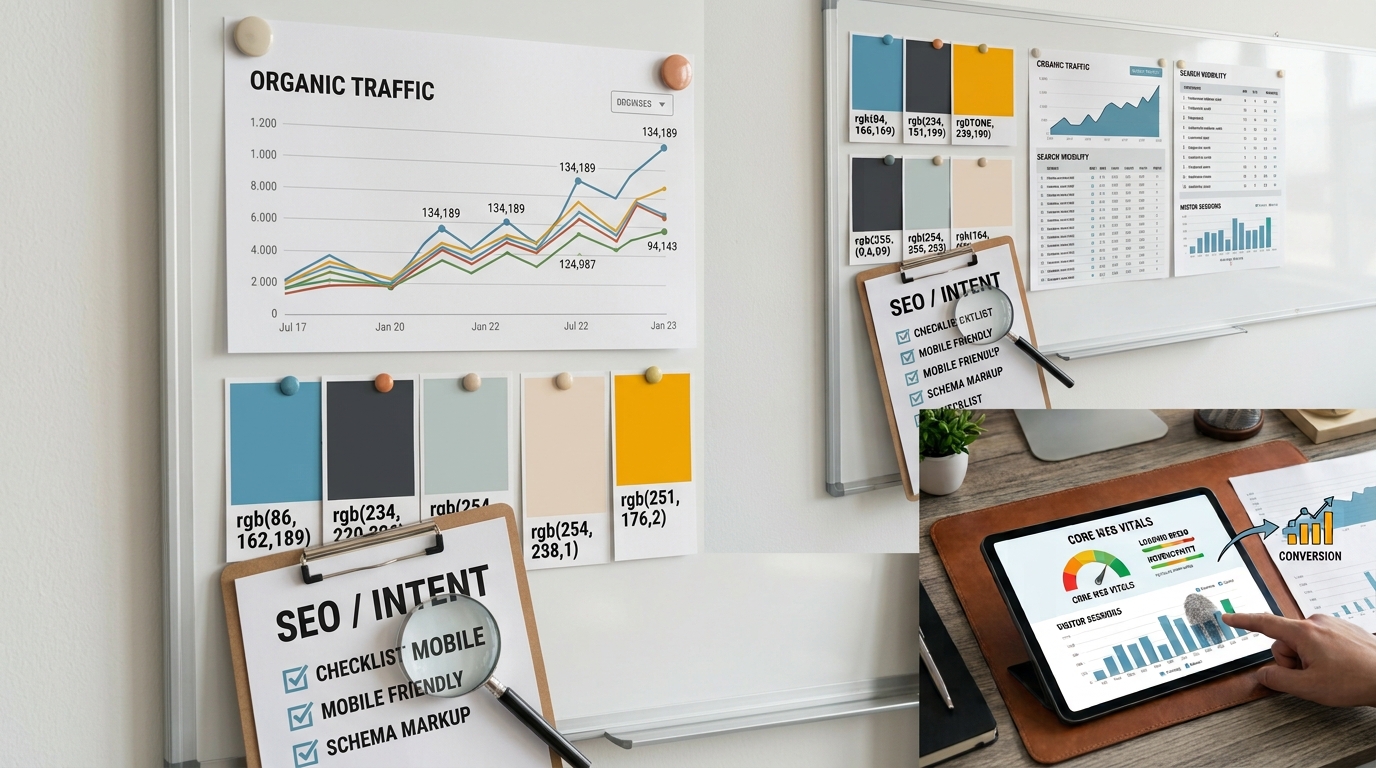
SEO can involve:
- Keyword research
- Search intent analysis
- Technical SEO
- On-page optimization
- Internal linking
- Metadata
- Heading structure
- Image optimization
- Schema markup
- XML sitemaps
- Indexing
- Local SEO
- Content strategy
- Performance optimization
A website should ideally be designed with SEO in mind from the beginning instead of trying to fix everything after launch.
HaxoTech SEO Services → https://haxotech.com/solutions/seo/
Google’s own SEO documentation explains that SEO helps search engines understand website content and helps users discover relevant pages through search.
5. Mobile Responsiveness
Your website needs to work properly across:
- Smartphones
- Tablets
- Laptops
- Desktop computers
Responsive design isn’t an optional luxury for modern websites.
Menus, buttons, forms, images, typography, spacing, and page layouts all need to work properly on smaller screens.
A website that looks excellent on a desktop but breaks on mobile can create unnecessary friction for potential customers.
HaxoTech’s website design service specifically focuses on responsive websites and user experience across devices.
6. Website Speed and Performance
Another important part of website development is performance.
Large images, excessive scripts, poorly configured plugins, unnecessary animations, and inefficient code can slow down a website.
Performance matters because users don’t want to wait for a page to load before they can find a phone number, service, product, or contact form.
Google’s Core Web Vitals focus on important aspects of user experience, including loading performance, interactivity, and visual stability.
Important performance areas include:
- Image optimization
- Browser caching
- Efficient CSS
- Efficient JavaScript
- Font optimization
- Server performance
- Lazy loading
- Minimizing unnecessary third-party scripts
7. E-Commerce Functionality
If you’re selling products online, your website becomes significantly more complex.
An e-commerce website may require:
- Product catalog
- Product categories
- Shopping cart
- Checkout
- Payment gateway
- Shipping configuration
- Tax configuration
- Customer accounts
- Order management
- Inventory management
- Product filters
- Discount codes
- Email notifications
- Analytics
WooCommerce and Shopify can both be used to build online stores, but the right platform depends on your products, business model, integrations, and long-term requirements.
8. Custom Features and Integrations
Custom functionality can significantly increase website development costs.
Examples include:
- Appointment booking
- Online reservations
- CRM integrations
- WhatsApp integration
- Email automation
- Payment gateways
- Membership systems
- Customer portals
- API integrations
- Advanced search
- Custom calculators
- Quote generators
- Multi-language functionality
A website with a few informational pages is relatively straightforward.
A website that communicates with multiple external systems is a different level of development project.
Business Website Cost by Website Type
Starter Website Package
A starter website package is ideal for small businesses, startups, and companies looking for a professional brand revamp with a strong online presence at an affordable cost.
This package includes:
- Up to 6 Pages
- 100% Custom Website Design
- 3 jQuery Slider Banners
- Lead Capturing Form
- Complete W3C Certified HTML
- Free Google-Friendly Sitemap
- Complete Website Development
- 6 Royalty-Free Stock Images
- Free Icon Design
This type of website is perfect for businesses that want a clean, modern, and conversion-focused online presence without ongoing subscription costs. It provides all essential features needed to establish credibility, capture leads, and present services professionally.
It works especially well for small service-based businesses, local companies, freelancers, and startups that need a strong digital foundation to grow their brand online.
Professional Lead-Generation Website
A professional lead-generation website goes beyond simply displaying information.
Its purpose is to turn visitors into:
- Phone calls
- WhatsApp conversations
- Form submissions
- Quote requests
- Booking requests
- Sales inquiries
It may include:
- Custom design
- Conversion-focused layouts
- Multiple service pages
- Testimonials
- Case studies
- Lead forms
- Strong calls to action
- SEO structure
- Analytics
- Speed optimization
For businesses that depend on inquiries, this is often a better investment than a basic brochure website.
E-Commerce Website
An e-commerce website is designed to generate transactions directly online.
The cost depends heavily on:
- Number of products
- Product variations
- Payment gateways
- Shipping requirements
- Inventory systems
- Integrations
- Customer accounts
- Custom functionality
The more complex the purchasing process, the more development and testing are required.
Custom Web Application
A custom web application is completely different from a standard business website.
It may include:
- User registration
- Dashboards
- Customer portals
- Databases
- Subscription systems
- Automated workflows
- API integrations
- Custom admin panels
- Complex business logic
These projects require significantly more planning, development, testing, security, and maintenance.
What Should a Professional Business Website Include?
Regardless of your budget, there are several elements you shouldn’t ignore.
Clear Value Proposition
Visitors should understand what you do within seconds.
Strong Calls to Action
Tell users what to do next.
Examples:
Get a Quote
Book a Consultation
Call Now
Request a Free Audit
Trust Signals
Include relevant proof such as:
- Reviews
- Testimonials
- Case studies
- Certifications
- Client logos
- Portfolio examples
- Industry experience
Mobile-First Experience
The website should work naturally on smaller screens.
Search-Friendly Structure
Use logical headings, descriptive URLs, internal links, useful content, and crawlable pages.
Secure Website
Use HTTPS and keep your CMS, themes, plugins, and integrations properly maintained.
Analytics
You should know what visitors are doing after they arrive.
Cheap Website vs Professional Website
A cheap website isn’t automatically a bad website.
The problem occurs when businesses choose based entirely on the lowest price.
A low-cost website may be enough if your only goal is to establish a basic online presence.
But if your website needs to generate leads, sell products, rank organically, or integrate with other systems, the cheapest option can become expensive later.
You may eventually have to pay for:
- Redesign
- SEO fixes
- Performance optimization
- Mobile fixes
- Security improvements
- Conversion optimization
- Content restructuring
- Technical development
The better approach is to determine the business objective first and then choose the appropriate level of development.
How to Reduce Your Website Development Cost
You don’t necessarily need every feature on day one.
A smarter approach is to launch an effective first version and expand it as the business grows.
Start With Your Core Pages
Build the pages that directly support your business.
Prioritize Revenue-Generating Features
If an appointment form can generate customers, prioritize it over unnecessary animations.
Use a Scalable CMS
A platform such as WordPress can allow businesses to expand their website without rebuilding everything from scratch.
Build SEO Into the Architecture
It’s usually better to establish the correct structure early than to rebuild it later.
Avoid Unnecessary Features
Every plugin, integration, animation, and custom function should have a purpose.
How Much Should You Actually Spend on Your Website?
Instead of choosing a website budget randomly, consider the value of one customer.
For example:
If one new customer generates $1,000 in revenue, and your website can consistently generate additional qualified leads, investing in a professional website becomes easier to justify.
The calculation isn’t:
Website cost = expense
It should be:
Website cost → leads → customers → revenue
That’s the mindset businesses should use when evaluating website development.
Why Choose HaxoTech for Business Website Design?
HaxoTech Technologies provides website design, development, SEO, branding, social media marketing, and other digital solutions for businesses.
The company has been operating since 2020 and works with businesses across multiple markets.
Our website development approach focuses on more than visual design.
We consider:
- Business objectives
- Target audience
- User experience
- Mobile responsiveness
- Website structure
- SEO
- Performance
- Conversion opportunities
- Long-term scalability
Whether you need a simple business website, an e-commerce store, or a more advanced digital solution, the right starting point is understanding what your business actually needs.

Frequently Asked Questions
How much does a business website cost in 2026?
The cost depends on the website’s complexity, number of pages, design requirements, functionality, integrations, content, SEO requirements, and maintenance needs. A basic business website can be significantly less expensive than an e-commerce store or custom web application.
What is the cheapest way to build a business website?
Using a pre-built template and a CMS can reduce initial development costs. However, businesses should consider whether the website will provide the design, functionality, performance, SEO structure, and scalability they actually need.
Is website design worth the investment?
For businesses that depend on online visibility and customer inquiries, a professionally designed website can become an important sales and marketing asset. The return depends on traffic, conversion rate, offer, industry, and customer value.
How long does it take to build a business website?
A simple website can be completed relatively quickly, while a custom website with advanced functionality can take considerably longer. The timeline depends on the scope, content, feedback, integrations, and testing requirements.
Should I build my website with WordPress or Shopify?
It depends on the project. WordPress can be highly flexible for content-driven and service-based websites, while Shopify is designed specifically around e-commerce. The right choice depends on your business model and required functionality.
Does a website automatically rank on Google?
Launching a website does not guarantee rankings or organic traffic. SEO involves technical accessibility, content, search intent, site structure, authority, and many other factors. Google also makes clear that following SEO best practices does not guarantee that a page will rank in a particular position.
Do I need SEO when building a website?
If organic search is an important acquisition channel for your business, SEO should be considered during website planning rather than treated as an afterthought.
Final Thoughts
The right website budget isn’t about finding the cheapest developer.
It’s about building the right system for your business.
A small local business may need a fast, professional lead-generation website.
An online retailer may need a complete e-commerce platform.
A growing company may need a scalable website with SEO, automation, CRM integrations, and conversion-focused landing pages.
Before choosing a website package, define:
What do you sell?
Who do you want to reach?
What action should visitors take?
How will the website generate business?
Once those questions are clear, determining the appropriate website investment becomes much easier.
If you’re planning a new business website or want to replace an outdated one, HaxoTech can help you evaluate the project, define the required features, and build a website designed around your business goals.
Ready to build a website that does more than just look good?